
From Pregnancy Through Parenthood: Care that Continues
Why Familiarity Matters in Ongoing Care
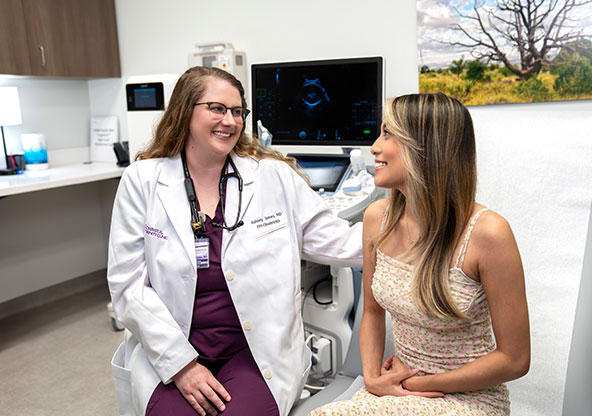
Dr. Ashley Jones, MD, knew early in her medical career that she wanted to be able to do as much as she could for patients.
Growing up with a mother who worked in perinatal medicine, Dr. Jones saw how closely pregnancy, delivery and long-term family health were connected.
While working at a specialized clinic, she found it difficult to say she could not help a patient because of the specialty she practiced. In medical school, that connection became clearer as she learned about family medicine and its ability to care for multiple generations, not just single conditions.
She was drawn to the relationships it allowed her to build over time, especially in obstetrics, where she could follow a patient through pregnancy, delivery, postpartum recovery and beyond.
I never liked telling patients, ‘We don’t take care of that,’
Dr. Jones said.
When I learned that family medicine physicians could take care of mom, baby and the whole family, that just felt right to me.
For much of the last century, health care moved toward specialization. Pregnancy, delivery, pediatric care and adult primary care were often split across different practices. While that shift expanded technical expertise, it also meant many patients had to move between providers who didn’t always know their full story, especially in rural or underserved communities.
In places like Alamogordo and the surrounding areas of Otero County, this fragmented approach often forces growing families to travel long distances or face stressful gaps in care.
Today, care is beginning to move back toward continuity. Family medicine is playing a growing role as concerns about access, coordination and maternal health highlight the value of physicians who follow patients over time and work alongside specialists when needed.
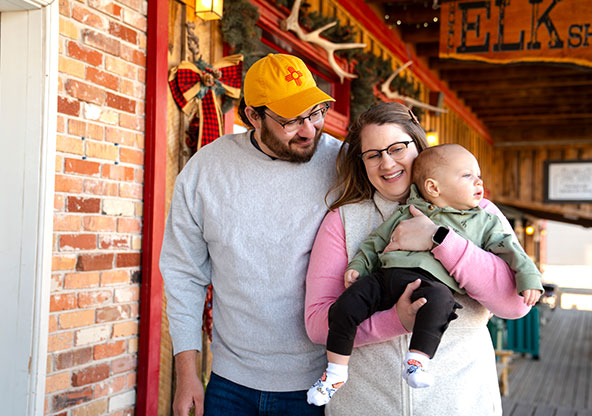
Dr. Jones’ practice reflects this shift. As a family medicine physician with obstetrics training, she serves as a steady presence through pregnancy, delivery and long-term family care — helping patients avoid unnecessary handoffs and make decisions with someone who already understands their history.
For patients, this approach can mean fewer handoffs and fewer moments of uncertainty.
Instead of starting over at each stage of care, patients work with a physician who already understands their history, their concerns and what has and hasn’t worked before. During pregnancy, that familiarity becomes especially important when complications arise or decisions need to be made quickly.
That was the case for Adonis Guerra.
Her pregnancy was healthy early on, but around 14 weeks, she began experiencing severe gallbladder pain. Not knowing what was causing it, she worried first about her baby. Multiple visits and tests followed, yet the pain continued and worsened as the pregnancy progressed.
I was in pain every single week,
Guerra said.
I didn’t know what to do.
When she began seeing Dr. Jones later in her pregnancy, the experience felt different.
Instead of being rushed through appointments or reassured without answers, Guerra said Dr. Jones sat with her, asked detailed questions and worked to understand both her symptoms and her fears.
She listened,
Guerra said.
She didn’t treat me like I was just supposed to deal with it.
As a family medicine physician with obstetrics training, Dr. Jones was able to step outside the limits of a single specialty. She monitored the baby’s growth, managed pain symptoms, ordered additional testing and adjusted care as the pregnancy progressed.
She considered me and my baby at the same time,
Guerra said.
That made a big difference.
During labor, Guerra experienced another severe gallbladder flare, an already painful condition layered onto childbirth. Because Dr. Jones knew her history, medications that had worked and warning signs to watch for, she was able to help manage both the pain and the delivery without unnecessary delays.
After her daughter was born, Dr. Jones continues caring for both mother and baby. Today, she also sees other members of Guerra’s family, allowing concerns to be addressed early and in context instead of being split across multiple offices.
It feels safe,
Guerra said.
I know I can go to her for anything, about me, my baby or my family.
This kind of long term relationship is what first drew Dr. Jones to family medicine.
She describes the work as being present for people across seasons of life, pregnancy, recovery, childhood and routine care.
When you know someone’s story, you don’t have to relearn it when something changes,
she said.
You can focus on helping.
Dr. Jones wants to keep care connected, coordinated and centered on the person, not just an office visit. For Dr. Jones, that connection is the point.
There’s nothing like following someone through pregnancy, seeing their baby grow and still being there years later,
she said.